
Lincoln County Criminal Court Records
A criminal court record begins when a criminal case opens in court. In Lincoln County, felony and misdemeanor criminal cases filed in the state trial court route through Lincoln County Circuit Court. The court file can show the charging document, arraignment, pleas, motions, bail or warrant events, hearings, disposition, judgment, sentence, restitution, fines, fees, probation terms, and no-contact or protective terms if entered.
Oregon's court structure matters. Lincoln County Circuit Court is the main state trial court. Municipal courts may handle lesser city violations, traffic citations, parking, and municipal-code matters, but the criminal court record for state-law prosecution is tied to Circuit Court and OJD systems. The District Attorney reviews criminal matters and decides whether to file, change, decline, or resolve charges through ordinary prosecution or a specialty-court path.
The Lincoln DUII diversion page is one example of a criminal case path with special requirements.
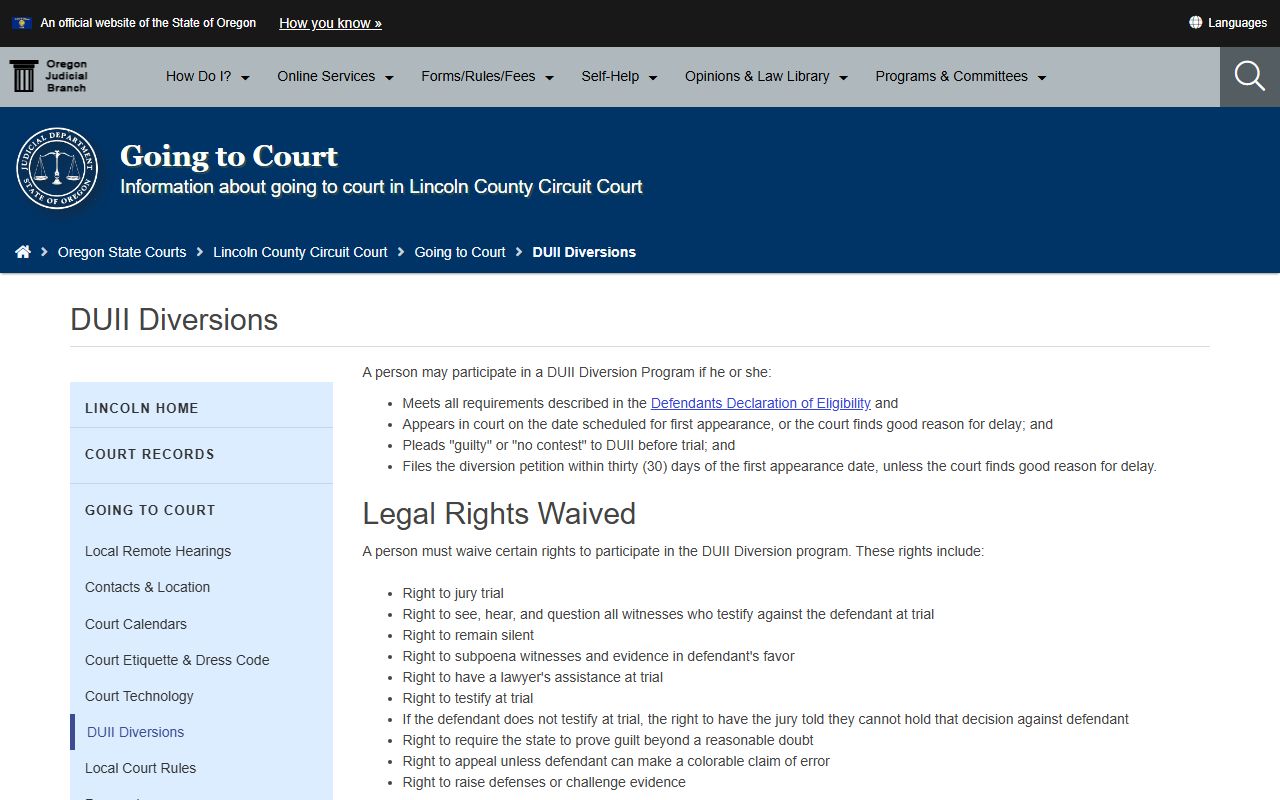
DUII diversion information belongs in criminal court records because diversion can affect how a case appears and resolves.
Search Lincoln County Criminal Records
Start with the free OJD records search for public basic case information. OJCIN Online may be needed for deeper register-of-actions and judgment records for criminal cases, including misdemeanors and felonies, when the case is public. Courthouse public kiosks can be used for non-confidential Circuit Court files, and official certified copies must be requested from Lincoln County Circuit Court records staff.
- Use OJD free records search for public criminal case information.
- Search by defendant name, case number, or case name when available.
- Confirm the court as Lincoln County Circuit Court before treating the case as a Circuit Court prosecution.
- Review the docket for filed charges, pleas, hearings, disposition, and judgment entries.
- Use the court copy request process for certified judgments, complete documents, or audio.
A jail roster entry is useful for custody status, but it is not the full criminal case record. For a closer look at booking charges and the arrest-to-charge path, use the Lincoln County arrest records and court charges page.
Lincoln County Criminal Case Flow
Criminal court records are easiest to read as a sequence. An arrest or citation may happen before court filing. Once the prosecutor files a complaint, information, or indictment, the court record tracks the formal case. Each stage can create a docket entry or document. Some cases move quickly to plea or dismissal. Others move through motions, pretrial hearings, trial, sentencing, or specialty-court monitoring.
Case flow: Charges Filed › Arraignment › Pretrial / Motions › Plea or Trial › Disposition › Sentencing
| Stage | What Happens |
|---|---|
| Charges filed | The prosecutor files the formal accusation that opens or advances the court case. |
| Arraignment | The defendant is advised of rights and a plea process begins. |
| Pretrial / motions | The court handles hearings, motions, discovery disputes, bail, warrants, or scheduling. |
| Plea or trial | The case resolves by plea, trial verdict, dismissal, or another court-approved outcome. |
| Disposition | The record shows the outcome of each charge or the case. |
| Sentencing | The court imposes jail, prison, probation, fines, fees, restitution, or other terms when there is a conviction. |
Lincoln County Criminal Record Fields
Criminal court records often contain more than the charge name. They can show the court location, case number, defendant name, filed charges, charge levels, pleas, disposition, sentence, probation, fines, fees, restitution, and related no-contact terms. The docket may also show warrant and bail events, attorney appearances, court dates, and judgment records. Confidential status can block public online access.
| Field | What It Shows |
|---|---|
| Case number | The Circuit Court identifier used for search and certified copies. |
| Defendant | The person accused in the filed criminal case. |
| Filed charges | The formal complaint, information, indictment, or amended charge list. |
| Plea | The defendant's response, such as guilty, not guilty, or no contest. |
| Hearing events | Arraignment, pretrial, motion, trial, sentencing, or review settings. |
| Disposition | The outcome for a charge or case, such as conviction, dismissal, acquittal, or other resolution. |
| Sentence | The penalty or terms imposed after conviction, including custody, probation, fines, fees, or restitution. |
Lincoln County Criminal Charging
The Lincoln County District Attorney's Office is a key source for understanding how arrest information becomes filed criminal charges. The DA page says the office prosecutes crimes, provides services to victims, trains and works with police partners, facilitates child support establishment and support, and oversees unattended suspicious death investigations. Jenna Wallace is listed as District Attorney.
The DA directory lists the office at 225 W Olive Street, Room 100, Newport, OR 97365, with phone 541-265-4145 and fax 541-265-3461. The directory also lists victim assistance, child support, medical examiner, restitution, legal staff, and deputy district attorney roles. That staffing detail supports a practical point in criminal records: a booking charge can be declined, changed, or filed differently by prosecutors.
The Lincoln County District Attorney page identifies the local prosecution office tied to criminal court records.
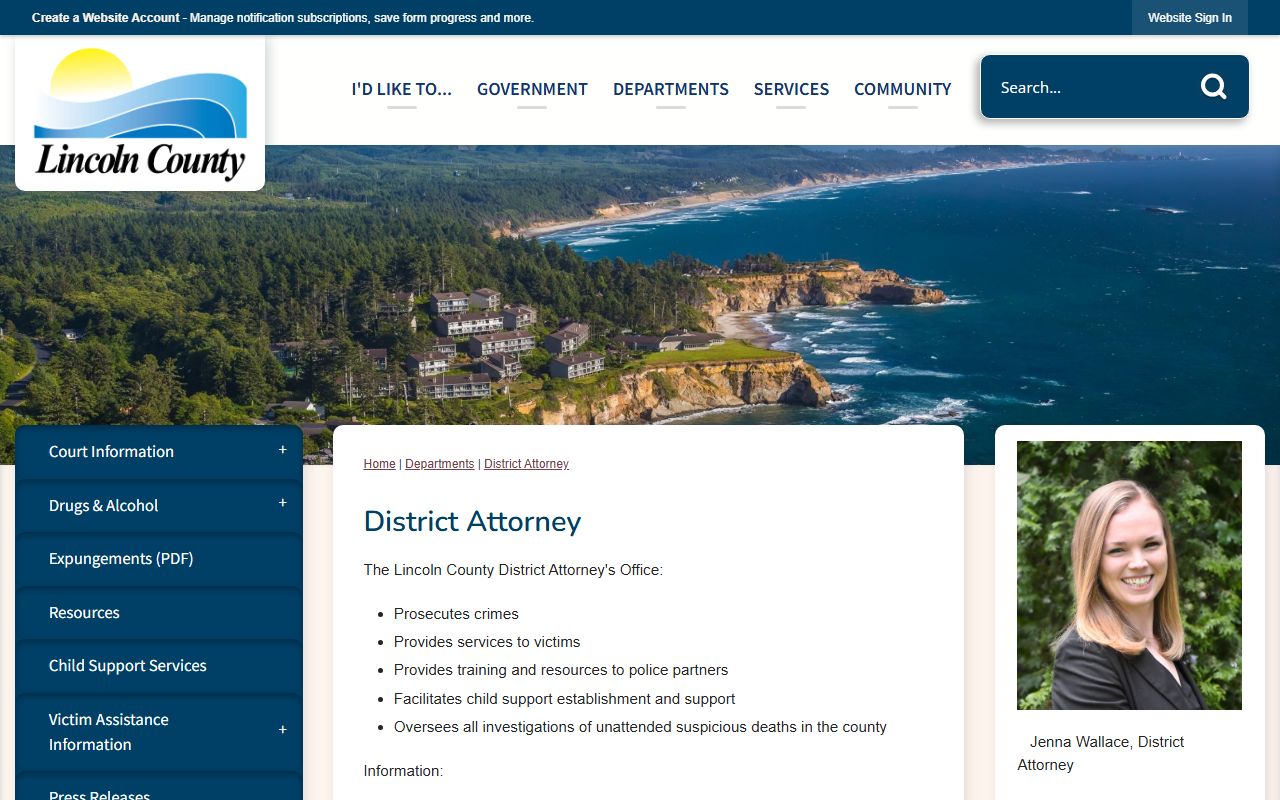
DA information helps explain why a jail roster charge and a filed court charge may not match.
Lincoln County Charges vs Convictions
A charge is an accusation filed or tracked in the criminal process. A conviction is a court outcome based on a guilty plea, no contest plea accepted by the court, or trial verdict. Lincoln County criminal court records can show charges that are amended, reduced, dismissed, declined, or resolved without conviction. The distinction is especially important when comparing a jail roster to the court case file.
| Feature | Charge | Conviction |
|---|---|---|
| Meaning | Formal accusation or alleged offense | Finding or accepted plea of guilt |
| Timing | Early or mid-case | After plea, verdict, or judgment |
| Can change | May be amended, reduced, dismissed, or declined | Can be appealed, set aside if eligible, or modified by court order |
| Record use | Shows what was alleged or filed | Shows legal outcome and sentence exposure |
Lincoln County Specialty Courts
Lincoln County's official Specialty Courts page identifies Drug Court and HOPE Court. Drug Court began in 2006 and is described as a problem-solving court using an evidence-based approach to break the cycle of addiction, reduce crime, and save lives and families. HOPE Court stands for Help and Opportunity through Probation with Enforcement and focuses on property offenders whose crimes are driven by addiction, with victim restitution as a core goal.
Specialty court participation can change how a criminal case progresses. Instead of a simple conviction-and-sentence path, the docket may show program admission, review hearings, treatment requirements, compliance monitoring, sanctions, restitution, or graduation-related events. Policies can change as best practices update, so the court record and program materials should be read together.
The Lincoln County Specialty Courts page describes local problem-solving court programs.
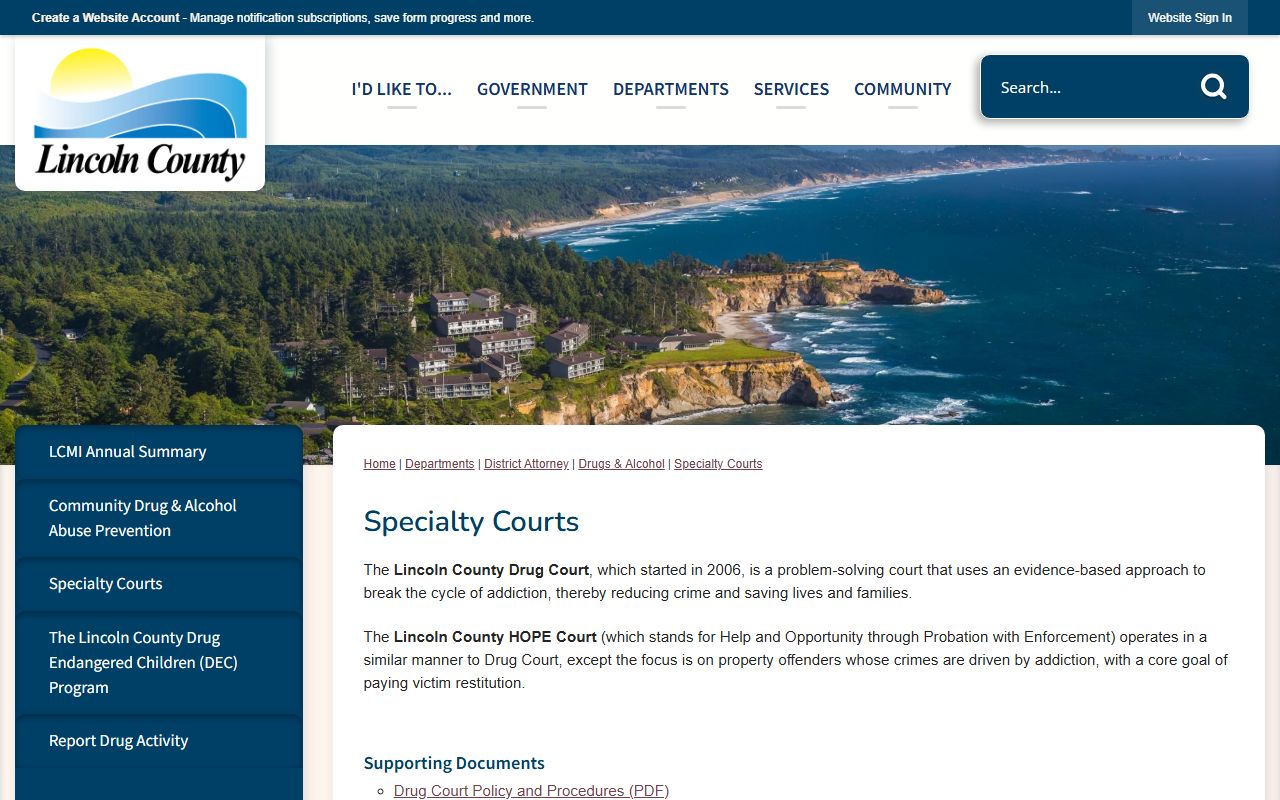
Specialty court records can show a treatment and compliance track rather than only a standard sentencing event.
Read Lincoln County Dispositions
Disposition means the outcome of a charge or case. In a Lincoln County criminal court record, disposition may show conviction, dismissal, acquittal, deferred outcome, diversion, or another court result. Sentence means the penalty or terms imposed after conviction. Probation is court supervision instead of, or after, jail or prison. Restitution is payment to a victim for loss. A fine is a monetary penalty, and a fee is a court or administrative cost.
Jail roster disposition language can also help, but it should not be treated as the same as the final court disposition. The roster may show "Pretrial," "Awaiting Pretrial Arraignment," "Convicted Pending Sentencing," "Sentence Served/Time Served," or "DA's Office Did Not File Charge." Those phrases can point to case status, yet the court judgment remains the source for the final criminal court record.
Sealed and Set-Aside Records
Oregon often uses the term set-aside for adult criminal record sealing. OJD's adult criminal set-aside instructions explain that a set-aside seals a criminal or contempt record from official public court records when the court grants the motion. The person must determine whether the arrest, citation, charge, conviction, or contempt finding qualifies under Oregon law, including ORS 137.225 and related requirements.
| Feature | Sealed / Set Aside | Not Sealed |
|---|---|---|
| Public visibility | Hidden from general public official court records after court order | Public if no other restriction applies |
| How it happens | Motion filed in the court that handled the case | No sealing order or statutory restriction |
| Eligibility | Depends on offense, case outcome, timing, and Oregon law | Public access follows normal court rules |
| Where to file | Lincoln County Circuit Court for cases handled there | Use public search, OJCIN, kiosks, or copy requests |
Lincoln County Criminal Access
Criminal court records are generally public unless a law, policy, court rule, or court order restricts access. OJD provides free basic public case information and calendars for eligible case categories, while OJCIN supports paid search of misdemeanors and felonies. Certified copies, older files, and audio go through Lincoln County Circuit Court records staff.
Key Statutes:
ORS 192.314 states the general public-record inspection right unless an exemption applies.
ORS 419A.255 and 419A.260 govern juvenile record access and juvenile expunction.
Restricted Lincoln County Criminal Records
Juvenile court records are restricted and are not provided through public OJD online search. Lincoln County Juvenile Department works with law enforcement, Circuit Court, the District Attorney, Health and Human Services, DHS Child Welfare, Oregon Youth Authority, and Community Corrections. Adult sealed or set-aside records are also hidden from general public access after the court grants relief.
The Oregon juvenile statutes page contains the juvenile record access and expunction framework.
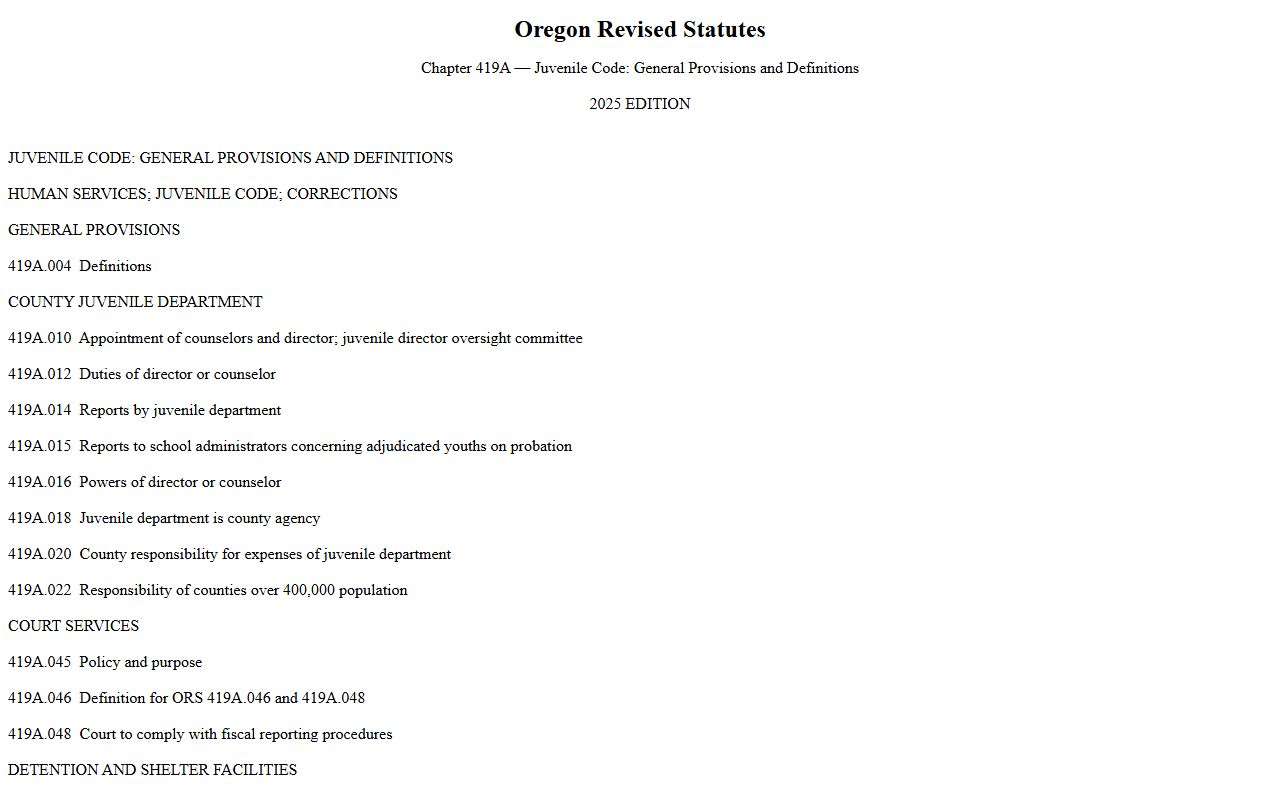
Juvenile restrictions explain why some criminal-adjacent records do not appear in ordinary public searches.
Adoption, mental health, VAWA-related matters, and confidential personal information can also be excluded or redacted. A public search result is not a complete test of whether a record exists. It is only a test of what is available through that public channel.
Note: For official criminal case proof, use the court judgment or certified copy, not a jail roster entry alone.